
Poland's climate falls largely within USDA hardiness zones 5 and 6, with northeastern regions including Podlaskie and Warmia-Mazury occasionally reaching zone 4 conditions. Winter minimum temperatures in Warsaw average around −7°C in January, but cold snaps can bring readings below −20°C in exposed positions. Selecting plants that withstand these extremes requires looking beyond average temperatures to include thaw-refreeze cycles, wind exposure, and soil drainage in winter.
Perennials Documented in Zone 5 Conditions
Several herbaceous perennials are consistently documented as surviving Polish winters without additional protection. The key characteristic shared by reliably hardy perennials is the ability to die back to a dormant crown or root system that remains viable through months of frozen ground.

Helleborus species
Both Helleborus niger (Christmas rose) and Helleborus orientalis (Lenten rose) perform reliably in Polish conditions. H. niger is rated to zone 3 in most databases and in practice flowers through late winter snow in sheltered positions. H. orientalis is slightly less cold-tolerant but accepts zones 4–9. Both prefer part shade and a humus-rich soil that drains well — standing water in winter can cause crown rot, which is a more common cause of loss than cold itself.
Planting hellebores in autumn allows some root establishment before the first hard frost. A light mulch layer of leaf mould over the crown is noted as beneficial in exposed positions, though established plants in sheltered spots typically require none.
Bergenia (Elephant's Ears)
Bergenia crassifolia and most Bergenia hybrids are rated hardy to zone 3. The large leathery leaves turn reddish-bronze through winter and remain largely intact even after heavy frost, a useful quality for winter garden structure. Bergenias are documented growing without protection in Polish botanical gardens including in Poznań and Kraków.

Geranium macrorrhizum
Bigroot geranium is one of the more adaptable ground covers for cold gardens. Hardy to zone 4, it tolerates dry shade — a combination few plants manage. The semi-evergreen foliage provides some winter interest before dying back fully in hard freezes. It naturalises readily and suppresses weeds, which makes it practical for areas that are difficult to manage in autumn.
Hardy Bulbs
Spring-flowering bulbs native to regions with cold winters are among the most reliably frost-hardy plants available. Many improve over successive years as clumps expand.
Bulbs commonly planted in Polish zone 5 gardens without lifting:
- Galanthus nivalis (Common snowdrop) — zone 3, naturalises in deciduous settings
- Narcissus (most cultivars) — zones 3–8 depending on cultivar
- Tulipa tarda (Wild tulip) — zone 4, more reliable than hybrid tulips over multiple years
- Allium moly — zone 3, requires well-drained soil
- Muscari armeniacum — zone 4, grape hyacinth, naturalises readily
- Scilla siberica (Siberian squill) — zone 2–3, among the earliest spring bulbs
Hybrid tulip cultivars are formally rated to zone 4 but in practice show declining performance after two or three years in Polish conditions unless lifted and stored. Species tulips such as Tulipa tarda, T. humilis, and T. turkestanica are documented as more reliably perennial in zone 5–6 conditions.
Evergreen and Semi-Evergreen Plants
Keeping foliage through winter in zone 5 conditions requires specific adaptation. Most broadleaf evergreens face a combination of cold injury and desiccation from winter wind. Plants that manage this successfully typically have small, waxy, or leathery leaves, or are adapted to sheltered positions.
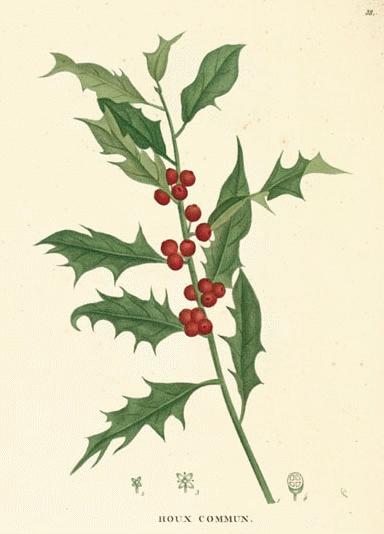
Ilex aquifolium and Ilex meserveae
Common holly (I. aquifolium) is documented hardy to zone 6, which places it at the marginal end for colder parts of Poland. Blue hollies (I. meserveae hybrids) are typically rated zone 5 and are the more practical choice for central Poland. Both require a sheltered position away from desiccating north and east winds. A female plant with a nearby male (within about 50 metres) is required for berry production.
Erica carnea (Winter Heath)
Unlike most heaths, Erica carnea tolerates alkaline soils and is rated hardy to zone 5–6 in most published references, with some cultivars documented surviving zone 4 conditions. It flowers January through April in Polish conditions, providing colour when little else is available. Documented reliably at the Warsaw University Botanic Garden and in domestic gardens across Mazovia.
Buxus sempervirens (Common Box)
Box is rated zone 5 and is widely grown in Polish formal gardens without protection. Severe winters with prolonged temperatures below −15°C combined with bright winter sun can cause bronzing and, in worst cases, branch dieback. North or east-facing hedges show less sun scorch. New cultivars such as 'Blauer Heinz' and 'Arborescens' are reported as showing improved frost resistance.

Positioning and Soil Factors
Hardiness zone ratings describe temperature tolerance, not overall cold hardiness in practice. Drainage is frequently cited as the most important secondary factor: plants that stand in waterlogged soil during freeze-thaw cycles suffer root damage that purely cold-adapted plants in well-drained positions avoid. Adding grit or coarse sand to heavy clay soils before planting cold-tender species reduces this risk.
South-facing positions can paradoxically cause problems for early-waking plants such as forsythia or certain hellebores. Rapid warming in February and March triggers bud break, which is then cut back when night frosts return. North-facing aspects, despite colder overall temperatures, sometimes produce better outcomes for plants that should stay dormant until frosts have reliably passed.
Useful References
Hardiness zone data in this article is based on the USDA Plant Hardiness Zone Map and the RHS hardiness classifications. Species-level data from the Plants for a Future database. Polish climate baseline from IMGW (Institute of Meteorology and Water Management).
Related articles on this site:
Article last updated: December 2024